
Loading John's Memorial Page...
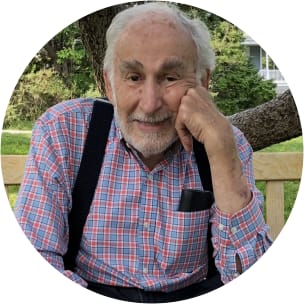
John A. Collins
–
New Rochelle, New York
REV. JOHN COLLINS
1929-2025
Reverend John Arthur Collins died peacefully in his sleep at home in New Rochelle, NY on
January 27, 2025. Rev. Collins was born in Chicago to Naomi Palm, a former kindergarten
teacher, and Bill Collins, Recreation Supervisor for the Chicago Parks District. John attended
public schools, graduating valedictorian from Gage Park High School in Chicago. A committed
Boy Scout, he achieved the rank of Eagle Scout. John attended Northwestern University,
graduating with a B.A. in Political Science followed by a J.D. from Northwestern Law School.
During the Korean War he served as a Navy Lieutenant on the USS Badoeng Strait in the Yellow
Sea and afterwards practiced law in Chicago for two years.
Feeling the need for a more spiritually oriented vocation, John entered Union Theological Seminary (UTS) in 1958 graduating in 1961. When the Social Action Committee took seminary students on a bus tour to meet A. Philip Randolph and Bayard Rustin in Harlem, John knew he
was in the right place. It was at Union that he discovered the Social Gospel that would shape the rest of his life. Two years of fieldwork at the Church of the Sea and Land on the Lower East Side
was formative to his ministry. As chair of the Social Action Committee, he organized a visit
from a USSR Communist Youth delegation to dialogue with UTS students and later brought the
brother of the Dalai Lama to speak at Union. Moved by the student sit-in movement, John and
others arranged for four Union students to serve as assistant pastors in Black churches in the
South during the summer of 1960 with John serving at Star of Zion AME Zion Church in
Talladega, Alabama, home of the Grand Dragon of the Ku Klux Klan. That fall under John’s
leadership and with faculty guidance, the group organized the Student Interracial Ministry (SIM)
which sent white students to work in Black churches in the South and Black seminarians to work
in white churches throughout the civil rights era.
In 1961, under the influence of Dr. George W. Webber, lifelong friend and mentor, John became
pastor of Jefferson Park United Methodist Church in East Harlem and a member of the Group
Ministry of the East Harlem Protestant Parish, a pioneering inner-city ministry. At Jefferson
Park, John organized a new Black congregation in what had been an historically Italian
Methodist church. Many of the parishioners he brought into the congregation became leaders and remain active in the church to this day.
John’s work in East Harlem coincided with the height of the civil rights movement. His ministry
and witness led him to play an active role in the struggles for racial equality and economic
justice. John organized a “Freedom School” in the church where young African Americans
learned about their African heritage and the heroic struggle for freedom from slavery. He took
inner-city youth on bicycle trips to the Pennsylvania Dutch country, hiking trips in northern New
York, and summer vacations to the Jersey Shore. In 1963 John was asked to organize a
delegation of N.Y. pastors to support efforts to integrate Methodist churches in Mississippi. John
and three other pastors, two white and two Black, spent a week in jail in Jackson, Mississippi
after they were arrested for attempting to attend Methodist churches in interracial pairs. Later
that year John was arrested with other religious leaders for trying to integrate a restaurant in
Wilmington, NC. John helped to organize MEND (Massive Economic Neighborhood
Development), the East Harlem component of the War on Poverty and served on its Board of
Directors. He was elected chair of the East Harlem Education Committee and became a leader in
the effort to achieve community control of the schools, getting arrested with a sympathetic
District Superintendent and some community leaders for trying to open schools that had been
padlocked during a teachers’ strike. He also organized the first Neighborhood Youth Corps and
the campaign for a civilian complaint review board in the New York City Police Department.
Leaving the parish ministry in 1968, John took a position as Associate Program Director of the
New York Conference of the UMC serving as Conference Youth Coordinator, Conference
Camping Director, and Church and Society staff. He launched programs focused on peace and
social justice which inspired numerous young people to pursue seminary and social justice work.
He worked with Connecticut Interfaith Housing, an ecumenical effort to assist churches in
building several thousand units of senior and affordable housing. For nine years (1968-1977) he
served as consultant/technician to numerous United Methodist churches in areas of church
growth, social action, youth ministry, leadership training, and mission exploration. In 1970, John
and his wife Sheila moved to New Rochelle, NY where he served as a Democratic District
Leader for over forty years.
After leaving the conference staff, John took a job as a staff member of the Interfaith Center on
Corporate Responsibility (1977-79). When the first major plant closing occurred at Youngstown
Sheet and Tube in Ohio, costing 10,000 jobs, John was assigned as liaison to the Ecumenical
Coalition of the Mahoning Valley, a coalition of religious and labor leaders seeking to reopen the
mill under worker-community ownership. Their plan required a $56 million government loan,
which the Carter administration turned down after heavy pressure from the big steel companies.
If this plan had been successful, the epidemic of plant closings over the succeeding decades
might have followed a different trajectory. While at the Interfaith Center John also worked to end
bank redlining, the practice of denying loans to low-income and minority neighborhoods. As a
result of his and others’ efforts, this discriminatory practice was finally outlawed by Congress.
In 1979, John took a pay cut to become Co-Director of Clergy and Laity Concerned (CALC), a
national interreligious peace and justice organization that had originally organized the religious
community’s opposition to the Vietnam War. At the time of John’s hiring, CALC consisted of a
national network of 35 local chapters that campaigned for human rights and disarmament. CALC
was a leader in the anti-apartheid movement and in the formation of the Nuclear Freeze
Campaign. One of John’s initiatives at CALC was to organize American support for the
European peace movement that was fighting the deployment of U.S. Cruise missiles on the
continent. John traveled throughout Europe meeting with peace leaders like German Green Party
founder Petra Kelly. He organized a speaking tour of said leaders and European parliamentarians
to build American opposition to the U.S. government policy of deploying these nuclear weapons.
With the help of friends and philanthropists Ping and Carol Ferry, he organized the “Friends of
Comiso,” which provided critical help to the Italian peace movement and was successful in
preventing the deployment of Cruise missiles in Sicily. During his years at CALC, he and his
wife’s work for social justice often converged. In 1984 during the presidential primary
campaign of the Rev. Jesse Jackson, John helped organize “Religious Leaders for Jackson” and
wrote speeches on foreign and peace policy for the candidate.
During the early 1980s John and his wife provided important advocacy support for the case of Eddie James Carthan, the young black mayor of Tchula, Mississippi who was railroaded out of
office and framed on trumped-up charges by the local white power structure. With one of the
charges being capital murder he could have been sentenced to the death penalty had it not been
for this national support effort.
When the Contra war against the Sandinistas began in the mid-1980s, John helped found Witness
for Peace (WFP), an interreligious organization that placed American volunteers in Nicaragua to
live among the people and document the humanitarian impact of this U.S. financed war. WFP
took American delegations to the war zones of Nicaragua to bear witness to the human cost of
the war gathering testimonies about Contra atrocities and returning home to share their
experiences and pressure Congress to stop the illegal war. John served on WFP’s Board and led
several delegations to the war zones. His daughter Jennifer served for two years as a WFP long-
term volunteer. WFP continues today to educate and advocate for a humane U.S. foreign policy.
During the Iranian hostage crisis of 1979, a delegation of U.S. religious people was organized to
go to Iran out of the Collins’s living room.
In 1986, nearing the end of a long career in ministry and social justice activism, John sought to
return to the local church and was assigned to pastor Tremont United Methodist Church in the
South Bronx, which served a congregation drawn largely from the Caribbean immigrant
community. While at Tremont, John helped organize South Bronx Churches, which constructed
over 500 single-family homes for low-and-moderate income families. Together with his friend
Father John Flynn and others, they founded “Save a Generation,” a program to train, educate and
employ at-risk youth.
Upon retiring from the pastorate in 1994, John became a field organizer for the Methodist
Federation for Social Action (MFSA), the independent progressive caucus within the UMC
which he had helped to revive years ago after it had been red baited during the McCarthy era.
He also led two religious fact-finding delegations to Venezuela and was emcee for an address by
President Hugo Chávez of Venezuela in a Manhattan church. In 1997, John initiated and served
as Dean of the Compass Program, a two-year training experience for new clergy in the New
York Conference of the UMC. In 2004 he served as Minister for Church and World at Memorial
UMC in White Plains, NY. John also co-taught classes in prison and mentored several formerly
incarcerated men.
John was arrested for protesting injustice and militarism in Mississippi, North Carolina,
Washington, DC, Cleveland, OH, and five times in New York City. Over the years he was a
tireless counselor, advocate and champion for dozens of people who had been victimized by
institutional racism, sexism, homophobia and other forms of injustice. Much of this work was
done quietly without outward notice or fanfare. During his later years he was the recipient of
several awards, including the Methodist Federation’s “Faithful Witness Award,” the Westchester
Martin Luther King, Jr. Institute’s “Champion’s Award,” and Union Theological Seminary’s
“Unitas Distinguished Alumni Award.” In retirement, John and Sheila enjoyed many travel
adventures in diverse parts of the world. John’s lifelong commitment to social justice was always
matched by a fierce love and devotion to his family.
He is survived by his wife, Dr. Sheila Collins, Professor Emerita of Political Science; two daughters, Jennifer, Professor of Political Science at the University of Wisconsin-Stevens Point;
and Megan, a physician at NYU Langone; his niece and nephew Elisa and Chris Shokoff; and
five grandchildren, Fiona Giménez-Collins, Sofia Giménez-Deniau, and Jackson, Will, and
Naomi Douglas. John was predeceased by his sister and her husband, Ruth and Jim Shokoff.
A Memorial Service will be held on Saturday, May 31, 2025, from 2:00-4:00 PM at Memorial
United Methodist Church, 250 Bryant Ave., White Plains, NY 10605. The service will also be
available on Zoom. Donations in memory of John can be sent to: Immigration Law & Justice
New York, P.O. Box 250603, NY, NY 10025.
“I work for a church which meets my spiritual needs but also where issues of social justice are
discussed and acted upon, and where I can join with others opposed to war, racism and
homophobia. I believe that the Sermon on the Mount and the teachings of the Hebrew prophets
are the core of the Christian faith.
I have learned that the Church is only fully Christian when it is engaged in the struggles of the poor and
oppressed, and that when it is, God is constantly opening new doors.
--John Collins
Arrangements by Andre F. Baker Funeral Home - White Plains